When communities face challenges like homelessness, food insecurity, or limited opportunities for young people, the conversation often focuses on the size of the problem.
But there is another side to the story.
Across the country, community solutions are already working. From housing programs that help people regain stability to youth leadership initiatives that inspire the next generation, proven models are helping communities create real change every day.
These solutions may not always make national headlines, but the data, and the human stories behind it, show that community-driven action can lead to lasting impact.
Proven Community Solutions That Are Making a Difference
Many of the most effective homelessness solutions begin with a simple principle: stability first.
One widely studied approach is the Housing First model, which prioritizes providing stable housing before addressing other challenges someone may be facing.
Instead of requiring individuals to solve other issues before receiving help, Housing First focuses on getting people into safe housing quickly and then connecting them with supportive services.
Research has shown that Housing First programs can achieve housing retention rates as high as 98% after one year, helping individuals remain safely housed while rebuilding their lives.
For many people experiencing homelessness, something as basic as having a stable place to sleep becomes the foundation for everything else, finding work, reconnecting with family, and restoring a sense of dignity.
These kinds of community solutions to homelessness demonstrate how practical, people-centered approaches can lead to real progress.
Community Partnerships Multiply Impact
Successful community solutions rarely happen in isolation.
They are powered by community partnerships between nonprofits, schools, local organizations, volunteers, and everyday people who want to make a difference.
Research on civic engagement shows that volunteering not only benefits communities in need, it also strengthens the well-being of those who participate.
When people work together around shared goals, the impact multiplies.
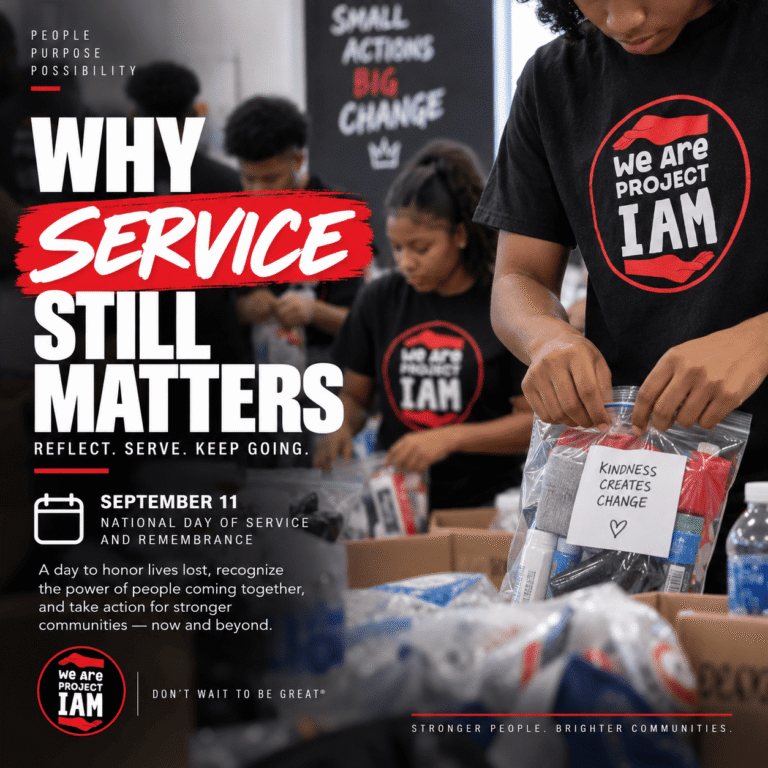
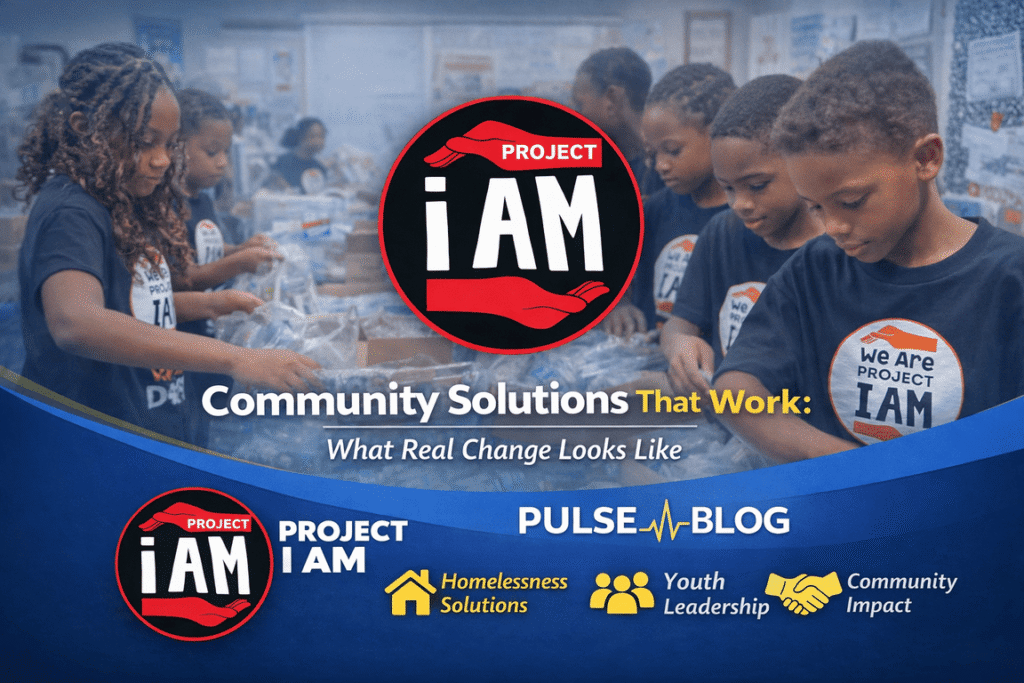
What begins as a small act such as packing care kits, mentoring a student, organizing a neighborhood service project, can grow into something much larger.
Communities become stronger, more connected, and more resilient when individuals step forward to support one another.
Youth Leadership Is Changing Communities
Another powerful solution gaining momentum is youth leadership.
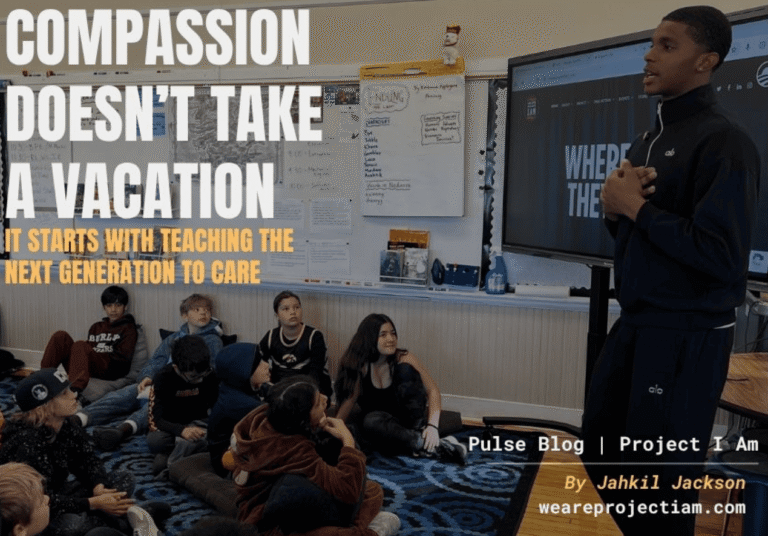
Young people across the country are stepping forward as community leaders, organizing service projects, raising awareness, and creating new ways to support their communities.
Programs that encourage young people to lead service initiatives do more than address immediate needs, they help young leaders build confidence, responsibility, and empathy.
Sometimes the moment that sparks this leadership is simple.
For Jahkil Jackson, founder of Project I Am, that moment happened when he was just five years old. After helping his aunt distribute food to people experiencing homelessness, he asked a question many adults struggle to answer:
“Why do people have to live outside?”
That moment stayed with him.
Years later, it helped inspire the creation of Project I Am, an organization that has now mobilized thousands of volunteers and helped impact hundreds of thousands of people experiencing homelessness and hardship.
But the most powerful part of the story isn’t the scale.
It’s the reminder that one moment of compassion can spark a lifetime of service.
Today, many young people are discovering that same truth.
Sometimes it begins with packing their first blessing bag.
Sometimes it starts with volunteering at a community event.
And sometimes it begins with a simple realization:
They have the power to make a difference too.
What Real Community Impact Looks Like
Real change rarely happens through one single moment.
More often, it grows through consistent actions across a community.
It looks like:
- A nonprofit working with schools to engage student volunteers
- Community members packing hundreds or even thousands of care kits
- A housing program helping someone transition from the streets into stability
- A young leader starting a service project in their own neighborhood
Each of these moments may seem small on its own.
But together, they form a network of community solutions that create lasting change.
Why Community Solutions Matter
Large systems and policies play an important role in addressing social challenges.
But real progress often begins closer to home.
It begins with people who care enough to take action.
It grows through partnerships, service, and leadership.
And it continues when communities recognize something powerful:
Real change happens when people show up for one another.
Across neighborhoods and cities around the world, community solutions are already creating meaningful impact and every person who chooses to help becomes part of that change.
Sources & Further Reading
National Alliance to End Homelessness – Housing First Model
https://endhomelessness.org/resource/housing-first/
Urban Institute – Housing First Research and Outcomes
https://housingmatters.urban.org
U.S. Census Bureau – Volunteering and Civic Life in America
https://www.census.gov/library/stories/2023/01/volunteering-and-civic-life-in-america.html